
An Extraordinary Blessing & Responsibility
by Joseph Hampton, BArch (hons) ANZIA Reg Arch, Principal – Architect
Some projects have a different responsibility. They ask us to think beyond our own lifespan and challenge us to consider what stewardship looks like 50, 100 or even 200 years from now. They ask you to consider what it means to create a place that might shape people’s lives for generations. The new Cathedral of the Blessed Sacrament is one of those projects.
For me, this project is also deeply personal. My family’s connection to the Catholic community in Christchurch stretches back more than 180 years. Earlier generations of my family contributed to the construction of the original cathedral. My grandparents worshipped within its walls. My
parents met on this site. Today, my
own children are part of the Cathedral parish community. In many ways, the Christchurch Diocese and the Cathedral Parish have helped shape the character and identity of my family across seven generations. To now play a role in helping create its future is an extraordinary blessing and responsibility.
As a Christchurch architect and someone who has been contributing to the cityscape for 20 years, I often think back to a moment when I was twelve years old, standing inside St Peter’s Basilica in Rome. I remember being overwhelmed by a sense of awe and inspiration that was difficult to explain. It was an experience that helped inspire my decision to become an architect. The young boy standing there could never have imagined that one day he would be presenting the design of a cathedral to a Bishop.

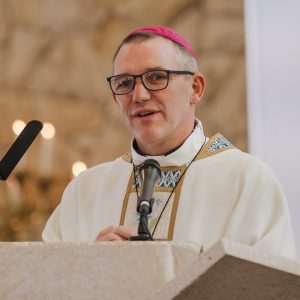
Experiences like that can inspire a vocation, but creating a cathedral for future generations is never the work of one person. It begins with a shared vision. Bishop Michael, together with an amazing group of advisors from across the Diocese, provided a brief that had clearly been shaped through prayer, consultation, and deep reflection. It spoke not only about the practical requirements of a cathedral, but also about how people should feel as they moved through each space. Together with the Diocese, my talented colleagues, our consultant team, and the dedicated parish and stakeholder advisory groups, we translated those aspirations into a design that is grounded in tradition, shaped by faith, and built responsibly for today.
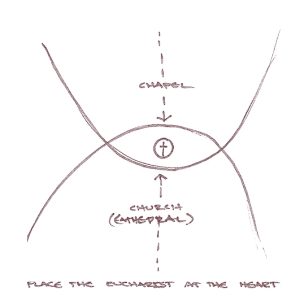
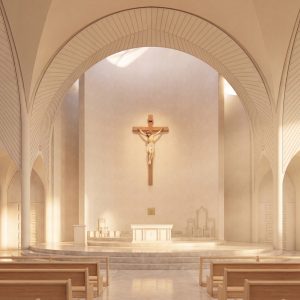
The cathedral draws from the rich traditions of the Catholic faith while responding to the realities and opportunities of contemporary Christchurch. Its cruciform plan provides a clear theological connection to Christ’s sacrifice while each element of the design reinforces the liturgy. The Blessed Sacrament sits quite literally at the heart of the building. Every seat is arranged to strengthen participation in the Mass and create a sense of shared communion. Space is provided for devotion, reconciliation, prayer, and pilgrimage.

The architectural language balances Romanesque solidity with Gothic aspiration. Strong forms, natural materials, and enduring construction methods are combined with light-filled spaces that gently draw the eye heavenward. The design seeks to create beauty without excess, grandeur with humility, and permanence without extravagance.
But this is not simply a cathedral building. It is a cathedral precinct. The wider campus, including the Te Rangimarie Centre and surrounding gathering spaces, have been designed to support the ongoing life of the Diocese while creating opportunities for education and community connection. It is a place where people can gather not only to worship, but also to meet, learn, celebrate, reflect, and spend time together. In that sense, the cathedral contributes not only to the life of the Church, but also to the identity, continuity, and collective memory of the city itself.
We often talk about creating buildings that endure. But the truth is that the most meaningful buildings endure because generations of people invest them with meaning. They become the setting for baptisms and weddings, funerals and celebrations, prayer and friendship. They become woven into the lives of a community.
My hope is that future generations will find in this cathedral what I found as a young boy standing in St Peter’s Basilica: a sense of wonder and inspiration, and a place that draws people together, deepens faith, and serves the people of Canterbury for generations to come.