
Seen, Known, and Supported - The Catholic Social Services Learning Assessment Pilot Programme
by Luis Arevalo, Catholic Social Services Manager
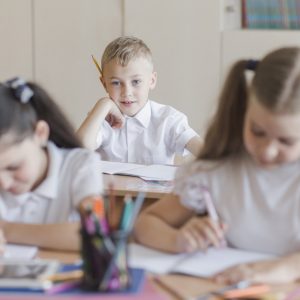
Educational psychologist Hannah Miller describes a moment in her reflection on this programme, which has stayed with me. She writes about parents arriving at their child’s school for an assessment appointment as relaxed, greeting school staff that they know and meeting on familiar ground rather than in a clinical waiting room they have never visited before. It sounds like a small thing. It isn’t. For many of the whānau we serve, the barriers to accessing specialist support for their children are not just financial, though the cost of a private educational psychology assessment can be prohibitive. They are also logistical, cultural, and relational. A service that comes to the child, in the place to which the child belongs, changes everything about what is possible. The Catholic Social Services (CSS) Learning Assessment Pilot Programme, made possible through the generous support of the Rātā Foundation, has been doing exactly this. Working in partnership with Linwood Avenue, Shirley Primary, Gilberthorpe School, and Rāwhiti School, we have been delivering professional learning assessments to tamariki, identified by their schools as most needing them, children who would otherwise simply wait and fall further behind, and perhaps never fully understand why learning feels so hard.

What the Data Shows
The outcomes have been striking. Throughout the case studies captured
in our report to the Rātā Foundation, we see consistent and meaningful change. For one student at Gilberthorpe, teacher scores for confidence in class rose from 3 out of 10 before the assessment, to 9 out of 10 six months later. The teacher’s own sense of being equipped to meet that child’s learning needs moved
from 3 to 10. Reading and writing both increased. The parent, who scored their understanding of their child’s learning needs at just 1 out of 5 before the assessment, scored it at 5, the maximum, at both the three-month and six-month follow-ups.
These are not abstract numbers. They represent a parent who now knows what their child needs. A teacher who now has the tools and the confidence to provide it. A child who now sits in class feeling capable rather than confused.
Another student’s teacher reported that while academic progress had been modest in the short term, confidence had grown across reading, writing, and maths. That shift in confidence, the willingness to try, to attempt the assessment, to stay in the room, matters enormously. It is, in many ways, the foundation everything else is built on.
What the Families Say
It is the testimonials from whānau, though, that carry the deepest weight. Parents have shared that they themselves struggled at school, and that receiving this report, finally understanding how their child’s brain works, finally having language for what they had observed for years, made them reflect on their own experience. As Hannah notes in
her professional reflection, some have wondered whether their own school years might have been different, had they received this kind of support.
This is what the report means when it describes the assessments as “a way of empowering families and breaking generational cycles.” We are not simply helping a child access better support in Term 3 of Year 4. We are potentially interrupting a pattern that has repeated across decades and generations, the pattern of children who learn differently being left to struggle, to disengage, to carry the quiet wound of believing they simply are not clever enough.
A Faith That Demands More Than Charity
Catholic Social Teaching has always insisted that children are not merely future adults to be managed, they are
full human beings, bearers of the divine image, deserving of every opportunity to flourish now. The Church’s understanding of integral human development, so beautifully articulated in documents from Rerum Novarum through to Pope Leo XIV’s recent Dilexi Te, holds that education is not a commodity but a fundamental right, one that allows each person to grow into the fullness of who they are created to be.
The Catechism is direct on this: parents hold a primary responsibility for the education of their children, and society is called to support them in this. When a child with an unidentified learning difference sits in a classroom year after year, without the right support, that is not a neutral fact, it is a failure of the collective responsibility we hold toward one another’s children. Pope Leo, writing in Dilexi Te, reminds us that “the poor are not there by chance or by blind and cruel fate.” The same is true of children who fall behind. It is not inevitable. It is not simply how things are. Behind every child who disengages from learning, there is often an unmet need that could have been identified and addressed, if only the right support had been accessible.
This programme is one answer to that challenge. It does not wait for families to find their way to a private clinic. It does not require parents to know the system, to have transport, to take time off work. It goes to where the children already are and it says: you are worth understanding. Your child is worth understanding.
Looking Forward
We are deeply grateful to the Rātā Foundation for making this pilot possible, and to the schools that have partnered with us so wholeheartedly. The relationships we have built with principals, learning support coordinators, and classroom teachers, are themselves part of the outcome, the trust that means recommendations are implemented,
that a psychologist visiting the school is welcomed rather than regarded with suspicion.
Hannah puts it simply: “There is still much to be done.” She is right. The need for this service extends well beyond the four schools in our current pilot. The children waiting for support, seen by their teachers, known to be struggling, but not yet reached, represent an ongoing invitation for this community to act.
We believe this work is not supplementary to the Church’s mission. It is the mission, the ancient call to see the child in front of us, to know their name and their need and to respond with the full weight of our resources and our care.